



When production figures are scattered across paper forms, Excel files, and manual processes, it is difficult for a factory to maintain an up-to-date view of progress, quality, and inventory. In a proposal for SMC Phu My Precision Mechanical Company, TECHWORLD outlines an approach combining AI cameras, RFID, and a data platform to automatically capture information at key operational points.
This article summarizes the proposed model; it does not confirm that the project has been implemented or achieved specific results. Its notable value lies in connecting shop-floor data with management needs: first making data visible, then progressively building a foundation for analysis and improvement.
Data bottlenecks to address
The document describes several challenges at the factory. Access control still involves manual steps; QC on the assembly line cannot yet count output in real time; and traceability information on the production line is limited. Warehouse and production data are also stored in multiple places, including Excel files and paper forms.
When information is not captured consistently and centrally, team leaders may find it difficult to monitor progress in real time, while management lacks a clear basis for tracking operations as a whole. The challenge, therefore, is not simply to add equipment, but to design data flows that fit each process.
Key perspective: automated data collection delivers value only when information from the gate, warehouse, and production line can be standardized, connected, and incorporated into operational reports.
Proposed model: capture data on-site and centralize it on a data platform
For Phase 1, the proposal combines data sources and equipment at different process touchpoints. AI cameras are proposed for license plate and facial recognition, as well as recording and counting products according to configured rules. RFID tags on trolleys, pallets, bins, or crates support tracking the flow of goods through reader points. PDA devices and QR/barcodes are also specified for certain receiving and inspection tasks.
For driver verification, the document proposes chip-enabled national ID card readers alongside an eKYC solution. The collected data is then sent to the BES Data Platform, described as a centralized platform built on a Lakehouse architecture, with capabilities for collecting, storing, processing, and analyzing data from multiple sources.
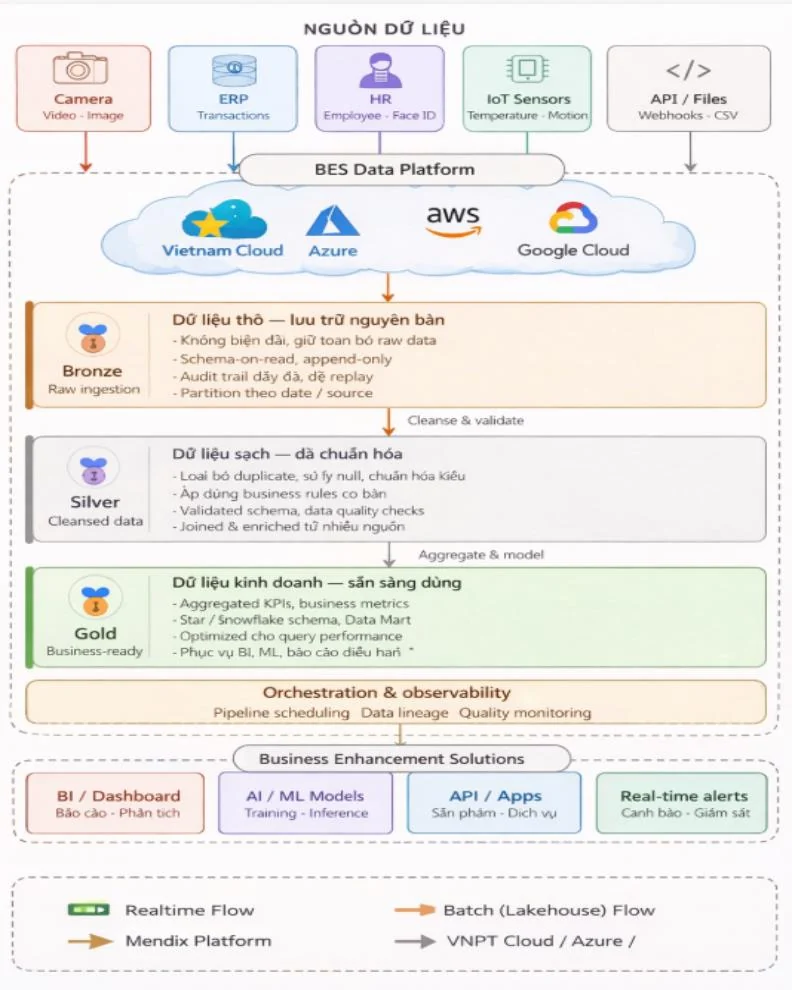
Phase 1 follows the operational flow
The proposed scope is not limited to a single production line; it covers operations from the factory gate through to delivery:
Gate and verification
Record vehicle information, entry and exit times, and driver details using the proposed data collection sources.
Receiving, shipping, and inventory
Track materials, work-in-progress, and finished goods; update locations, quantities, and movement times at warehouse checkpoints.
Stamping, assembly, and QC
Record product codes, output, and pass or fail quantities at the processes included in the scope.
Packing and delivery
Connect packing information and delivery checks, as well as outbound flows, with warehouse data.
The proposal also includes surveying current processes, advising on SOP standardization, designing data collection flows, and developing visual reports and alerts for errors based on recorded data. This is essential to ensure that technology supports existing operations rather than creating another disconnected source of information.
A phased roadmap that does not skip the foundations
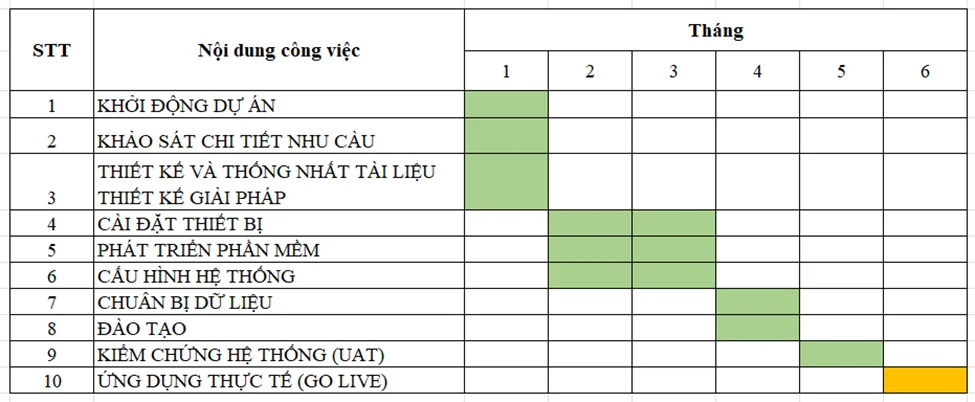
The plan in the document allocates work across six months, from project kickoff and needs assessment through solution design, equipment installation, software development, system configuration, data preparation, training, UAT, and live use. This sequence shows that implementation requires coordination across process standardization, shop-floor equipment, data integration, and user testing.
Phase 2 is intended to expand into asset management, preventive maintenance, production molds and tools, and operational safety checklists. The document presents these as a subsequent scope and they should not be understood as part of Phase 1.
From visibility to data-driven improvement
In the proposal’s Smart Factory vision, the first step is to make data visible. Once data has been collected and organized, the factory can move toward root-cause analysis, trend identification, and predictive capabilities. Greater levels of autonomous operation are viewed as a direction for future development, not an immediate outcome of installing AI cameras or RFID.
For companies considering shop-floor digitalization, a practical lesson is to start with clearly identifiable bottlenecks: where manual data entry occurs, where real-time figures are lacking, and where goods flows need to be traceable. The collection scope, data standards, and reporting should then be designed in alignment with the processes.
Discuss your factory data challenges
TECHWORLD can work with your business to review current processes, identify priorities, and explore a data collection model suited to your operational scope.